


Key Takeaways
- Catching a wave is a sequence of skills that includes positioning, paddling, standing up, and balancing, all working together to create a successful ride.
- Understanding how waves carry a surfboard forward can help make the learning process feel less intimidating and easier to approach as a beginner.
- Preparing before your first surf lesson by choosing suitable destinations, instructors, and equipment can create a more positive learning experience.
- Small, beginner-friendly waves and supportive learning environments often provide the best conditions for developing confidence and practising new techniques.
- Progress in surfing comes gradually. Missed waves, awkward pop-ups, and short rides are all part of the journey, and regular practice helps build confidence and consistency.
Introduction
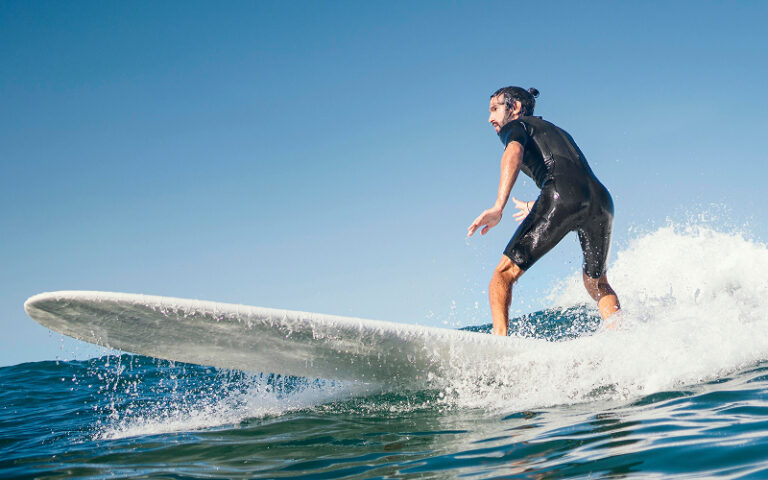
In surfing, “catching a wave” refers to the moment a wave begins carrying your board forward, allowing you to transition from paddling to riding. It is the point where you connect with the wave’s energy and start moving with it rather than simply floating on the water.
For beginners, this is one of the most important skills to learn. Standing up on the board often receives the most attention, but none of that can happen until you successfully catch the wave in the first place. Positioning, paddling, timing, and balance all play a role in making that happen.
For Singaporeans starting their surfing journey, understanding how wave-catching works can make those first sessions feel much less intimidating. Before stepping into the water, it helps to know what catching a wave involves, why it matters, and how to prepare for the learning process ahead.
Learning How to Catch a Wave
Catching a wave may look effortless from the shore, but it is actually a sequence of movements that work together. Each stage builds on the one before it, and understanding how they connect can make the learning process much easier to follow.
Step 1: Position Yourself in the Right Spot
Catching a wave often starts before the wave even arrives. A common beginner mistake is sitting too far away from where waves have enough energy to carry the board, or positioning too close to where they are already breaking: both can make it difficult to catch waves consistently.
Instead, try to position yourself where approaching waves are beginning to build shape and momentum. During lessons, instructors will often help identify these take-off zones and explain how to recognise them. Good positioning gives you the best chance of connecting with the wave and makes every step that follows much easier.
Step 2: Paddle to Match the Wave’s Speed
Once a suitable wave approaches, your focus shifts to paddling. Now, your objective is to build enough speed so the wave can begin carrying you forward. Strong, steady paddle strokes are usually more effective than short or hesitant movements.
A valuable surfing tip for beginners is to keep paddling even when the wave feels close behind you. Stopping too early is one of the most common reasons beginners miss waves.
As the wave starts to catch up with your board, you will often feel a sudden burst of forward momentum: this is usually the signal that the wave has begun carrying you.
Step 3: Perform Your Pop-Up
Once the board is moving with the wave, it is time to stand up. This movement, known as the pop-up, takes you from a lying position into your surfing stance. Rather than climbing up gradually, aim to move smoothly from your hands to your feet in one controlled motion.
For most beginners, the pop-up requires practice because it combines timing, coordination, and confidence. Practising the movement on land before entering the water can help build familiarity and make it feel more natural during a lesson.
Step 4: Stay Balanced and Ride the Wave
After standing up, your attention shifts to staying balanced as the wave continues moving beneath you.
A stable stance usually involves slightly bent knees, centred body weight, and eyes looking ahead rather than down at the board. Keeping your posture relaxed allows your body to respond naturally to the movement of the wave. It is common for beginners to stiffen up after standing, but tension often makes balancing more difficult: small adjustments tend to be far more effective than large movements.
Every successful ride, no matter how short, helps build confidence and improve your feel for the board. With practice, balance becomes increasingly natural and riding waves starts to feel much more intuitive.
Why is Wave-Catching Important For Beginners?
Wave-catching is often one of the first major skills beginner surfers work on because it forms the foundation for everything that follows. Before you can practise standing up, maintaining balance, or riding along the wave, you first need to connect with the wave and allow it to carry the board forward.
Learning how to catch a wave also helps you become more familiar with how waves move and how your board responds in the water. As you gain experience, concepts such as timing, positioning, and paddling start to feel more intuitive, making each surf session more enjoyable and productive.
Because wave-catching involves several skills working together, it can take time to develop. Having the right preparation before entering the water can make the learning process feel much more manageable and help you build confidence from the start.
Preparing For Your First Surf Session
Once you understand why wave-catching is such an important part of learning to surf, the next step is setting yourself up for a positive first experience. The conditions you learn in, the guidance you receive, and the gear you use can all influence how comfortable and confident you feel when practising new skills.
With these useful beginner surf travel tips in mind, taking a little time to prepare before your first lesson can help create a smoother learning experience and allow you to focus on making the most of your time in the water.
Start With a Beginner-Friendly Surf Destination
Once you’ve decided to learn, choosing the right destination is one of the first practical decisions you’ll make. Because Singapore does not have consistent surf breaks, most beginners look for opportunities to go surfing near Singapore in neighbouring destinations.
Locations such as Bali, Lombok, Bintan, and parts of Malaysia are popular starting points because they offer surf schools, beginner lessons, and waves that are generally more manageable for first-timers.
When learning how to catch a wave, smaller, slower-moving waves are usually easier to work with than powerful surf. Beginner-friendly beach breaks with sandy bottoms tend to provide a safer and more forgiving environment, giving you more opportunities to practise without feeling rushed by local conditions.
Learn With an Instructor
For your first few sessions, learning with an instructor can make the process much easier. An experienced instructor can help you understand surf safety, identify suitable waves, and provide guidance on positioning, paddling, and standing up.
When researching surf schools, look for instructors who regularly work with beginners and operate in beginner-friendly conditions. Clear instruction, small group sizes, and a structured lesson plan can make a significant difference during the early stages of learning.
Choose Surf-Specific Clothing Over Regular Swimwear
What you wear may not seem important before your first lesson, but it can make a noticeable difference once you’re in the water.
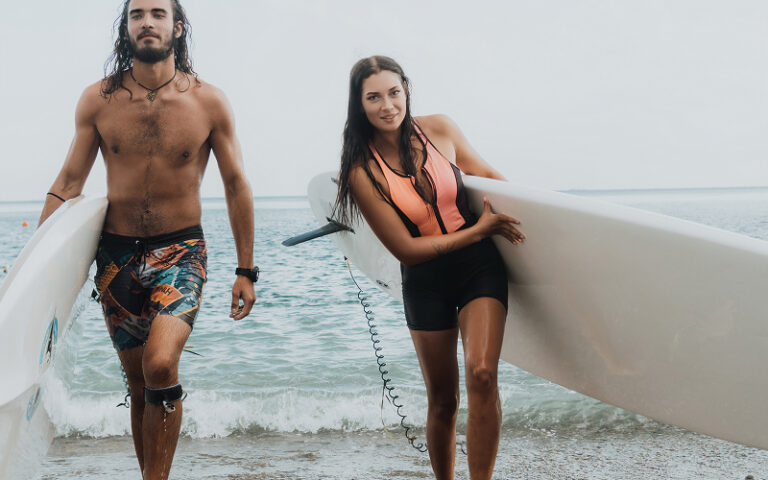
Regular swimwear is primarily designed for swimming, relaxing, or spending time at the beach. Surfing involves much more movement, including paddling, lying on the board, popping up, and repeatedly getting back into position after falling off, and thus requires dedicated surfing apparel.
Surf-specific clothing is designed to stay comfortable during active movement and prolonged time in the water. They are typically made from lightweight, quick-drying materials that move easily with your body, allowing you to focus on learning rather than adjusting your clothing throughout the session.
A rash guard, for example, helps reduce friction between your chest, arms, and the surfboard while also providing additional sun coverage. They are particularly popular among beginner surfers because they help make long learning sessions more comfortable: beginners often spend a significant amount of time paddling, practising pop-ups, and climbing back onto the board, requiring extra protection from irritation. When choosing one, look for a fit that sits close to the body without feeling restrictive, as excess fabric can bunch up during paddling.
No Wave Catch Starts Perfectly
After learning about positioning, paddling, popping up, and balancing, it helps to remember that these skills rarely come together perfectly right away. Missing waves, paddling too early or too late, struggling with your pop-up, or losing balance shortly after standing up are all normal parts of learning how to catch a wave. Every surfer goes through the process of gradually turning these individual skills into one smooth movement.
Don’t worry if it feels awkward at first: as with any skill, consistency comes through repetition. Each session helps you improve your timing, build confidence in your paddling, refine your pop-up, and become more comfortable on the board. Small improvements often add up faster than you expect.
Conclusion
Learning how to catch a wave is one of the most rewarding parts of starting your surfing journey because it brings all the fundamentals together. From choosing a location and instructor to paddling, popping up, and finding your balance, each step helps you become more confident in the water.
It may take a few sessions before everything starts to feel natural, and that’s completely normal. Every wave you attempt helps you develop better timing, technique, and confidence, making each surf session a valuable part of the learning process.
At Hurley SEA, our surf wear is designed for life spent around the water. Whether you’re heading out for a surf trip, relaxing on the beach after a lesson, or planning your next coastal adventure, our collection combines performance-driven design with everyday versatility.
Explore our latest collections and discover pieces built for beach days, surf travel, and everything in between